

External wall insulation is still one of the most popular ways to insulate a home. It’s perfect for solid wall buildings, where cavity insulation is impossible and internal insulation would mean sacrificing too much space. It’s also a chance to update the look of your home, with options ranging from brick-effect finishes to coloured renders and more.
The problem with external wall insulation is understanding your different options and which solution is actually the best for your property. The main aim is to be warmer, of course, but what about cost? Effectiveness? Environmental impact?
In this article, we’ll take you through your options, and discuss which is the best external wall insulation system for you. We’ve split it into two categories – the insulation material itself, and the render that covers the system.
Insulation
Expanded Polystyrene (EPS)
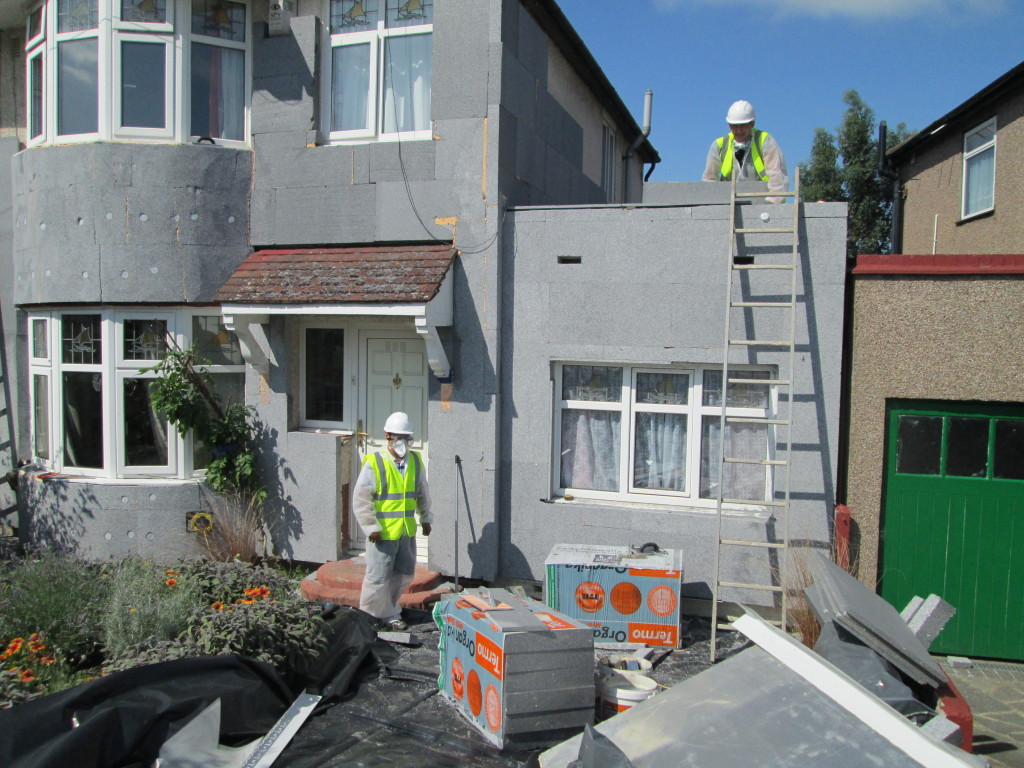
Imagine the little polystyrene balls in a beanbag, but packed together to make a board. EPS is by far the most common external wall insulation material, owing to the fact that it’s cheap, light, and easy to work with. It’s so light because the trapped air bubbles prevent heat from transferring from one side of the board to the other.
The only problem with EPS is that it doesn’t perform as well as the mineral wool on the fire classification – usually ends up as B1 or B2, rather than A1 or A2. When used in a properly installed external wall insulation system, this shouldn’t matter, since the EPS is integrated and fully covered. The fire would come up against the barrier of the render before it ever got to the insulation, and render a much higher fire rating.
Mineral Wool
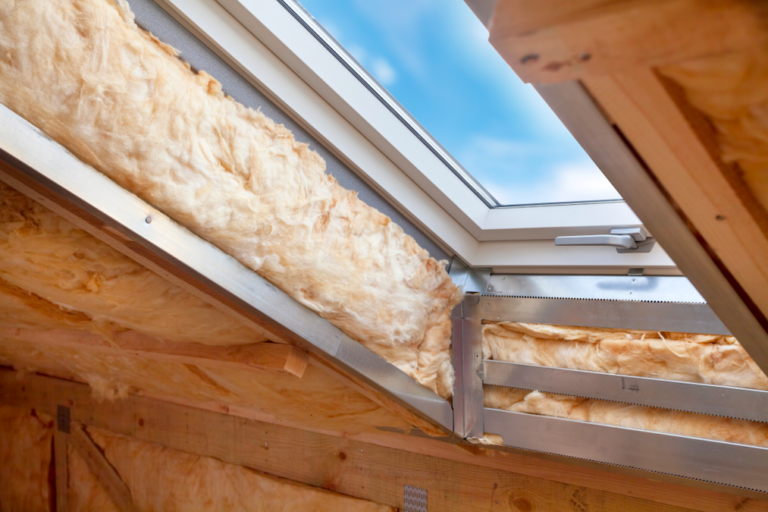
Mineral wool is a lot like the itchy rolls of insulation that get used for loft insulation. In an external wall system, the mineral wool is compressed a lot more, to make it into a rigid board. Unlike EPS, it’s got a high fire-resistance rating (A1 or A2), and it also boasts great soundproofing qualities.
The downside of mineral wool is that it’s much heavier than EPS or Kingspan and more difficult to work with, meaning that the labour costs of installing it tend to be higher. It also lags behind some of the others on this list for insulation values, meaning that you need more of it to achieve the same result.
Also mineral wool, whilst being great on fire performance, it is not as thermally efficient as EPS. In addition in the parts of the country where there is plenty of moisture during the application process, it is easier to install an EPS to further protect the external facade against water penetration.
Wood Fibre
Wood fibre is the way to go if your criteria for the best type of external wall insulation is sustainability, as well as thermal comfort. We recommend using the Steico boards, which is made from sustainable pine that’s collected from sawmill waste chippings, shavings, and sawdust. It’s incredibly breathable, which makes it perfect for timber-framed properties, where moisture can be absorbed and released as the house breathes.
It has the lowest thermal properties of any of the forms of insulation we’ve mentioned here, and it very heavy, but for many people this will be outweighed by the eco-friendly credentials.
Kingspan K5
Kingspan are producers of Kooltherm K5, another type of insulation we love. It’s a rigid pink phenolic board, and has the best thermal performance of any insulation on this list. It’s also super light and easy for installers to work with.
The downside of Kingspan K5 is that it’s a lot more expensive than alternatives like EPS. If you’re tight on space or don’t want your insulation as thick, it’s a great option, but beware of the price tag.
Cork Insulation
Cork insulation is a very sustainable natural way to insulate the external walls, however it can be very pricey and hard to obtain for different levels of thickness. If you have an old stone cottage or a heritage building many consumers are choosing cork and wood fibre as more sustainable choices.
Render and Decorative Finishes
Silicone Render
Silicone is the premium, top-notch render choice, the real big hitter for the best external wall insulation system. It’s so popular because it’s breathable, hydrophobic (which means it repels dirt and organic growth) and can be custom mixed to any colour you want. The pigment is in the render itself, so you don’t need to paint over it or worry about paint chipping.
Acrylic Render
The more cost-effective alternative to silicone renders, acrylic provides the same flexibility and colour options, but doesn’t have the hydrophobic properties. It’s a great choice for most people, just be aware that it requires a little more upkeep than silicone-based renders.
Mineral Render
The mineral render is a popular choice as it can be installed all-year-round. It is advantageous because the top-coat itself is cementitious and can be installed in a high humidity environment – particularly during the Winter months of December to February. It does still need to be sealed with a silicone based masonry paint – however the topcoat layer can dry quicker than the acrylic or silicone alternatives.
Brick Slips
Finally the home could be externally insulated and finished off with a lightweight brick slip finish. The lightweight brick slips are great, because they not only look very realistic, they don’t add too much load onto a wall. A good brand to use is the Elastolith, which we recommend due the choice of colours, but also due to the ease of installation.
Installing External Wall Insulation?
Looking for a trusted installer for your external wall insulation project? We’ve got you covered. Just fill in the form below and someone will be in touch with you as soon as they can.




EPS stands for Expanded Polystyrene
[…] https://www.thegreenage.co.uk/what-is-the-best-type-of-external-wall-insulation/ […]
It seems to me that some key information is missing from this article – what about end of life processing of each material? Does Kingspan end up in landfill? I think that is an extremely important consideration in choosing what material to use, especially when considering on a large scale.
Incredibly useful information! This is exactly what I’m looking for, and you’ve done a fantastic job! Continue to write.
Great information
Provided a good overview of external wall insulation.