There is a phrase that keeps popping up in home improvement conversations right now: improve, don’t move.
And honestly, it makes sense.
A lot of homeowners are looking around at the cost, hassle and uncertainty of moving house and thinking, do I actually want to move, or do I just want this house to work better for me? That is a very different question. Once you look at it that way, upgrading the home you already have can start to feel a lot more sensible than chasing the “perfect” next property.
That does not mean every renovation is worth doing. It definitely does not mean throwing money at random upgrades and hoping for the best. What it does mean is taking a step back and asking which improvements will genuinely make your home warmer, cheaper to run and nicer to live in.
Energy bills are not where they were, but they are hardly “cheap”
One of the biggest reasons homeowners are still thinking about upgrades is simple, because running a home is expensive.
The latest government figures estimate the average 2025 standard domestic electricity bill at £1,069 and the average gas bill at £834, for a combined figure of £1,904. Yes, that is lower than 2024, but only by £25 overall. In other words, it is a bit of relief, not some dramatic return to low-cost energy.
That same release also shows how mixed the picture still is. The share of households on fixed tariffs has risen, and average domestic energy bills for both fuels on a fixed tariff fell by 1.8% in 2025 compared with 2024, while the equivalent for variable tariffs was broadly unchanged, rising by 0.2%. So while the worst volatility may have eased, bills are still high enough that people are very reasonably asking how to protect themselves against future shocks.
That is really the heart of the “improve, don’t move” argument. It is not only about resale value or kerb appeal. It is about making the home you already live in more comfortable and more resilient.
Improving your home is about comfort as much as cost
When people talk about home upgrades, they often jump straight to savings. That is understandable, but it is only part of the story.
Most homeowners do not wake up thinking about U-values or fabric performance. They think about the front room that never quite warms up. The wall that always feels cold to the touch. The heating that seems to be on constantly in winter. The condensation that keeps coming back. The room that is boiling in summer and freezing in January.
That is why good home upgrades tend to have a double benefit. They can help reduce heat loss and running costs, but they can also make a home feel better day to day. That might mean fewer cold spots, a more even temperature, less draughtiness or a house that simply feels less hard work to live in.
Insulation still deserves to be near the top of the list
If you are trying to decide where to start, insulation still deserves serious attention.
Around 33% of all heat lost in uninsulated homes escapes through the walls. Its guidance also notes that insulating solid walls can reduce heat loss, lower heating bills, reduce the risk of condensation forming on walls and cut draughts.
That matters because many UK homes, especially older ones, are still not performing particularly well. If your house was built before the 1990s, it may not have wall insulation at all.
So if you are living in an older property and it always feels colder than it should, it is worth looking closely at the building fabric before spending money elsewhere. New décor is lovely. A new kitchen is exciting. But neither of them will stop warmth leaking out through underperforming walls.
For solid-wall homes, external wall insulation can be a big one
This is where external wall insulation comes into the conversation.
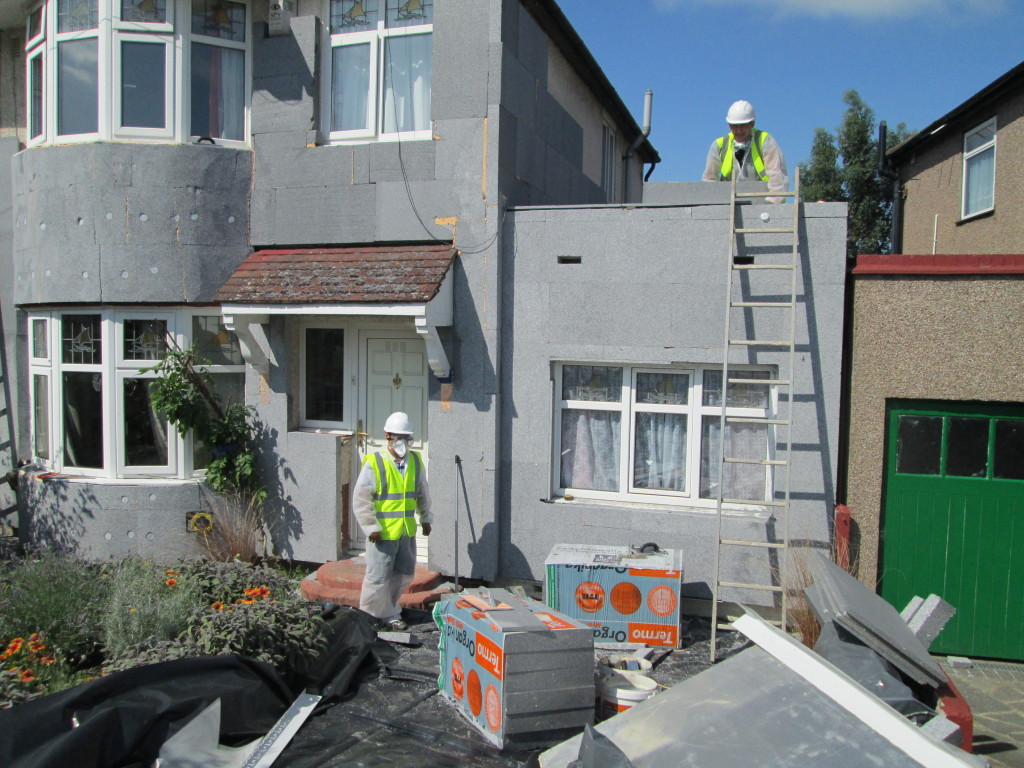
For solid-wall homes, it can be one of the more transformative upgrades because it tackles the building envelope itself rather than just masking the symptoms inside. Done properly, it can help the home hold heat more effectively, improve comfort and refresh the look of the outside at the same time.
That said, it is not a small job and it is not right for every building.
Typical installation costs for a three-bedroom semi-detached home in Great Britain are around £18,000 for external wall insulation and £12,000 for internal wall insulation. Costs can come down if the work is done alongside other external works, such as replacing windows, repairing the roof or installing solar panels, because the scaffolding may already be in place.
That is such an important point. The best time to think about retrofit is often before you do other major work, not after. If you are already planning to touch the outside of the house, it makes sense to ask whether insulation should be part of the same conversation.
There is also a caution here. Solid wall insulation may not be suitable for every home, especially if the building is in poor condition, exposed to extreme weather, at risk of flooding or vulnerable to overheating. It’s important to deal with exterior defects such as damaged brickwork, pointing, roofs, gutters and downpipes before adding insulation, otherwise you risk trapping in problems rather than solving them.
So no, this is not about saying “everyone should get EWI”. It is about saying that for the right solid-wall home, external wall insulation can be one of the most meaningful upgrade routes available.
Government policy is also pointing firmly towards upgrading homes
Another reason this topic feels so relevant in 2026 is that the policy direction is increasingly clear: the UK is still moving towards improving existing homes, not ignoring them.
The government’s Warm Homes Plan says it will deliver £15 billion of public investment, support upgrades in up to 5 million homes, and offer help ranging from fully funded measures for some households through to low- and zero-interest loans for others. The same announcement says the plan is intended to help cut bills, tackle fuel poverty and make homes warmer and more affordable to run.
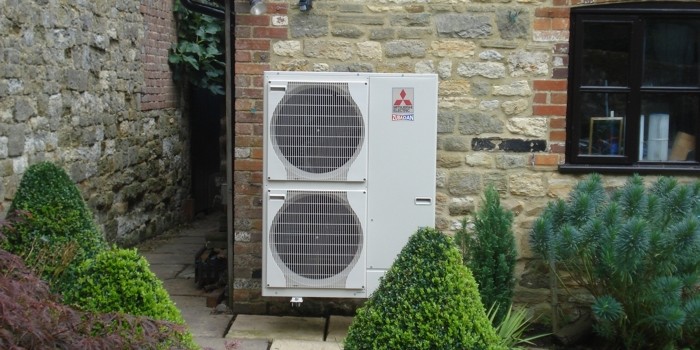
Alongside that, the government has confirmed that the Boiler Upgrade Scheme budget for 2026 to 2027 will be £400 million, which is another sign that home energy improvements remain a live priority rather than a sidelined one.
There have also been changes to how some energy costs are recovered. The government’s Warm Home Discount response confirms that suppliers should recover WHD costs through the unit rate rather than the standing charge from 1 April 2026. The response also says Budget 2025 measures are expected to remove an average of £150 of costs from household energy bills from April 2026.
And while it is aimed at the social sector rather than owner-occupiers, the government’s response on improving the energy efficiency of socially rented homes is still revealing. It says the intention is to bring new and existing social homes up to EPC C using the reformed EPC system, with providers expected to choose between measures such as fabric improvements, solar panels and heat pumps. That is useful because it shows the wider direction of travel: better-performing homes, with insulation still central to the conversation.
It is not just government policy pushing this conversation forward. Finance is starting to play a bigger role too. In our recent article on 0% loans for greener homes, we looked at how Nationwide’s Green Additional Borrowing scheme could help some homeowners fund improvements such as insulation and other energy-efficiency measures. For people weighing up whether to move or improve, that kind of support makes retrofit feel a lot more achievable.
So, should you improve or move?
Sometimes moving still makes perfect sense. Space, location, family needs and finances all matter.
But if the real issue is that your current home is cold, costly to run, dated on the outside or simply not working hard enough for you, then improving it may be the smarter question to ask first.
The best home upgrades are not the flashiest ones. They are the ones that make everyday life better. A warmer living room. Fewer cold walls. Lower heat loss. Better comfort. Less wasted energy. A house that feels easier to live in.
That is why “improve, don’t move” has stuck around as an idea. It is not just a catchy phrase. For a lot of homeowners in 2026, it is a genuinely practical way of thinking about the future.
And if you live in an older home, especially one with solid walls, it is well worth exploring whether insulation, external wall insulation or a broader retrofit plan could make staying put feel a lot more worthwhile.