There’s a slightly awkward truth about improving the energy efficiency of homes in the UK, most people want to do it, but the upfront cost can stop them in their tracks.
Solar panels, insulation, new windows, heat pumps, ventilation upgrades… the list of sensible improvements grows quickly, and so does the bill.
That’s why a recent announcement from Nationwide Building Society is genuinely interesting for anyone who spends their evenings reading about EPC ratings, retrofit strategies or the thermodynamics of solid walls (which, if you’re here, might include you).
Nationwide has announced that it is doubling the number of homeowners who can access its 0% Green Additional Borrowing scheme, allowing up to 10,000 mortgage customers to borrow between £5,000 and £20,000 interest-free for energy-efficiency improvements.
In the world of home retrofit, that kind of financial lever matters.
How Green Home Finance Is Turning Policy into Real Home Energy Upgrades
If you remember, we recently looked at the Green Home Finance Strategic Partnership and why it matters for the future of home energy upgrades in the UK.
That initiative, launched as part of the government’s wider Warm Homes Plan, aims to bring together lenders, the energy sector and retrofit specialists to make it easier for households to finance improvements such as insulation, solar and other energy-saving upgrades.
At the time, the big question was how quickly lenders would move from policy ambition to real financial products.
Well, it looks like that process is already underway.
By expanding its 0% Green Additional Borrowing scheme, Nationwide is effectively showing what that shift can look like in practice: lenders beginning to develop financial products designed specifically to help homeowners fund energy efficiency improvements.
If the UK is serious about upgrading millions of homes, this kind of collaboration between lenders, government and the retrofit sector will be essential. Grants alone won’t fund the scale of change required, but accessible finance could help unlock far more home upgrades over time.
Why Green Finance Is Becoming a Big Deal for Home Energy Upgrades
Most homeowners aren’t opposed to energy improvements. In fact, surveys consistently show that people want warmer homes, lower bills and smaller carbon footprints.
The challenge is timing.
Energy upgrades often require a large upfront investment before the long-term benefits appear. Even if something like insulation or solar panels pays back over time, the initial cost can still feel like a barrier.
This is where green finance starts to play a role.
Instead of relying entirely on government grants or personal savings, schemes like this allow homeowners to spread the cost of improvements while still making progress towards a more efficient home.
Since launching the scheme in 2023, Nationwide has already lent around £60 million, with the average loan sitting at roughly £13,000. That’s a meaningful chunk of retrofit activity.
How Nationwide’s 0% Green Additional Borrowing Works
The scheme itself is fairly straightforward but it addresses one of the biggest barriers to improving home energy performance, upfront cost.
Through the programme, mortgage customers of Nationwide Building Society can apply for additional borrowing specifically to fund energy-efficiency improvements to their home. The borrowing ranges from £5,000 to £20,000 and crucially, it comes with 0% interest over either a two-year or five-year term.
To keep things aligned with standard mortgage lending rules, the additional borrowing is available up to 90% loan-to-value (LTV). In other words, the total borrowing against the property cannot exceed 90% of its value.
Homeowners don’t need to wait years before applying either. Once the first mortgage payment has been made, customers can apply for the green borrowing if they want to upgrade their home’s efficiency.
For households thinking about improvements like insulation, solar panels or more efficient windows, the scheme essentially spreads the cost of those upgrades without adding interest, which makes the maths of energy improvements a lot more appealing.
What homeowners are actually using the loans for
According to Nationwide, the most popular upgrades include:
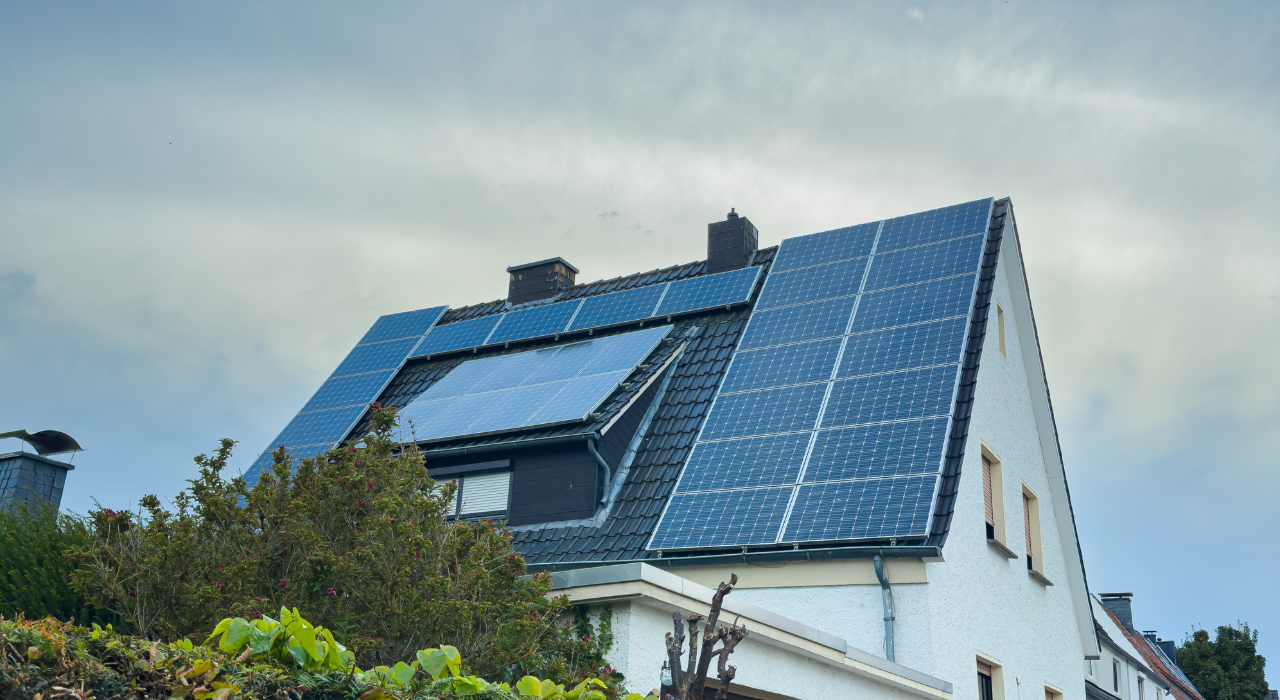
- Solar panels
- Insulation improvements
- Energy-efficient windows
Which, if you’re the sort of person who enjoys staring at thermal imaging cameras and debating U-values over tea, will come as no surprise.
These upgrades follow a fairly logical pattern. Many homeowners start by tackling energy generation or building fabric improvements, both of which can have a noticeable impact on energy use and running costs.
And if the UK is serious about reducing emissions from housing, these kinds of changes will need to happen at scale.
Why Energy Efficiency in Homes Matters for the UK
Residential buildings are responsible for roughly a fifth of emissions in England, which makes the housing sector one of the biggest pieces of the decarbonisation puzzle.
Research referenced by Nationwide suggests that bringing all homes up to EPC Band C or better could cut emissions from residential buildings by as much as 47%.
That’s an enormous shift.
It also highlights something that anyone who follows energy policy already knows, the UK doesn’t just need better technology. It needs ways for ordinary households to afford the transition.
The Growing Role of Green Finance in the UK Retrofit Market
Nationwide’s expansion of the scheme also coincides with its involvement in the Green Home Finance Strategic Partnership, an initiative linked to the government’s wider retrofit ambitions.
The idea is fairly simple.
If lenders, government bodies and the energy sector all develop practical ways for households to finance improvements, the path to upgrading millions of homes becomes much more realistic.
Grants alone will never cover the entire housing stock. However a combination of grants, incentives and low-cost borrowing might just start moving the needle.
Making Energy-Efficient Homes More Affordable
If you’re someone who already thinks about things like insulation performance, solar generation or the efficiency of your heating system, the biggest takeaway here is simple:
Access to finance is slowly improving.
More lenders are beginning to treat energy efficiency improvements as something worth supporting financially, rather than just another home renovation project.
That shift could make it easier for more households to move from thinking about upgrades to actually installing them.
Which, ultimately, is where the real impact happens.