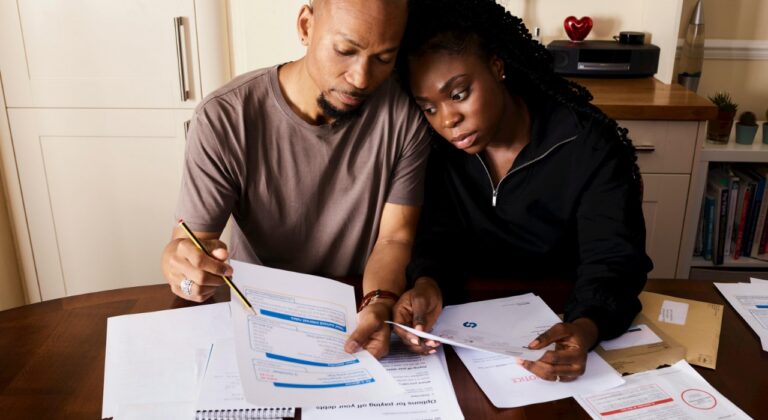
Winter has arrived, the heating is firmly back on for many households, and another sizeable increase in energy prices is now on the way.
Ofgem has confirmed that the energy price cap will rise by 26% from 1 January 2027. For a typical household paying by Direct Debit for gas and electricity, the annualised figure will increase from £1,723 to £2,166.
That is a jump of more than £400 at exactly the time of year when many homes are using the most energy.
But the £2,166 figure doesn’t mean every household will receive a bill for that amount. How much you actually pay will still depend heavily on how much energy you use.
So what exactly is changing, and what can you do to reduce the amount of energy your home needs this winter?
What Is the Energy Price Cap?
The name can be slightly misleading.
The energy price cap doesn’t set a maximum amount that your annual energy bill can reach. Instead, Ofgem limits the amount suppliers can charge for each unit of gas and electricity on standard variable tariffs, along with the daily standing charge.
Use more energy and your bill will be higher. Use less and you will pay less.
The current cap, running from 1 October to 31 December 2026, is equivalent to £1,723 a year for a typical Direct Debit household.
From 1 January to 31 March 2027, that rises to £2,166. The cap applies to around 20 million households on standard variable tariffs, while customers who are currently on fixed tariffs will not be affected by the increase until their fixed deal ends.
The figures apply across England, Scotland and Wales. Northern Ireland has a different energy market.
How Much Are Gas and Electricity Prices Increasing?
The increase looks particularly significant when you look at the individual unit rates.
Until the end of December, the average electricity rate for someone paying by Direct Debit is 26.32p per kWh, with a standing charge of 54.83p per day.
From January, electricity increases to an average of 32.69p per kWh. The standing charge remains relatively similar at 54.77p per day.
Gas sees an even steeper increase.
The current average rate of 7.97p per kWh rises to 10.96p per kWh from January, while the average daily standing charge changes only slightly from 29.68p to 29.65p.
That means households that use a lot of gas for heating could notice the January increase particularly strongly.
Why Is the Energy Price Cap Going Up?
The main reason is higher wholesale gas prices.
Ofgem says continued conflict in the Middle East has pushed up international gas prices, which has increased the cost of supplying energy to households. Gas prices are rising by more than electricity prices under the new cap.
Unfortunately, the timing couldn’t be much worse.
January and February are usually among the coldest parts of the year, meaning many households will be using their heating for longer just as the cost of that energy increases.
It makes understanding how efficiently your home uses energy increasingly important.
Will the £100 Household Energy Payment Help?
Some households will receive additional support.
The government has announced a one-off £100 Household Energy Payment for eligible households in England from January 2027.
Broadly, households living in a property in Council Tax bands A to D as their sole or main residence on 4 January 2027 will qualify. Around 20 million households are expected to receive the payment.
Payments are due to begin from 4 January 2027.
If your council already holds verified bank details because you pay your Council Tax by Direct Debit, the payment should generally be made automatically. Other eligible households will be contacted by their council about how to receive it.
There is also a £100 million discretionary fund intended to support some households facing financial difficulty who fall outside the main scheme.
The £100 will provide some relief, but with the typical price-cap figure increasing by £443, it won’t completely cancel out the effect of higher prices for households using typical amounts of energy.
What About VAT on Electricity?
There is another piece of support already reflected in electricity prices.
Domestic electricity in Great Britain is temporarily zero-rated for VAT. The measure began on 1 October 2026 and was originally due to finish at the end of March 2027, but it has now been extended until 30 June 2027.
The important thing to remember is that this reduction is already factored into the published electricity rates.
You shouldn’t therefore take another 5% off Ofgem’s figures when trying to estimate what you’ll pay.
Should You Wait as Long as Possible Before Using Your Heating?
Every autumn and winter, the same debate appears: how long should you wait before turning the heating on?
There isn’t really a magic date.
If your home is uncomfortably cold, leaving the heating switched off simply because you think it is too early in the year isn’t necessarily sensible.
A better approach is to make sure the heating you’re using isn’t being wasted.
Your room thermostat is a good starting point. For most people, somewhere between 18°C and 21°C is considered a comfortable range, although individual needs will vary. Energy Saving Trust recommends setting the thermostat to the lowest temperature that remains comfortable for your household.
And remember that turning the thermostat up to 25°C won’t make a cold house reach 20°C any faster. It simply tells the heating system to keep running until the higher temperature is reached.
Heat the Rooms You Actually Use
Heating controls can also make a difference.
A programmer lets you choose when the heating comes on, while a thermostat tells the system when the home has reached the temperature you want.
Thermostatic radiator valves, or TRVs, allow individual radiators to be controlled separately.
That means a spare bedroom doesn’t necessarily need to be heated to the same temperature as the living room you’re using all evening.
The aim isn’t to make every room as cold as possible. It’s about having greater control over where and when you’re using energy.
Even small adjustments to your heating routine can become more meaningful when energy unit rates are rising.
Is Your Home Losing the Heat You’re Paying For?
Heating controls only address part of the problem.
You can have an efficient boiler and sensible thermostat settings, but if the building itself loses heat quickly, your heating system will need to keep replacing it.
Heat can escape through several parts of a property, including the walls, roof, floor, windows and doors.
The exact amount will vary considerably depending on the age, construction and condition of the home.
This is where insulation becomes important.
Insulation slows the movement of heat through the building fabric. During winter, this helps keep more of the heat you’ve paid to produce inside your home for longer.
For some properties, improving insulation can therefore have a much bigger long-term impact than continually adjusting the thermostat.
Check Your Loft Insulation
The loft is one of the easiest places to investigate.
Heat naturally moves towards colder areas, and an inadequately insulated roof can allow a significant amount of warmth to escape from a property.
Many homes already have loft insulation, but that doesn’t always mean it is performing as well as it should.
Older insulation may be too thin, compressed, damaged or unevenly installed. There may also be areas that were missed entirely.
If you can access your loft safely, it can be worth checking the condition and depth of the existing insulation.
Just remember that insulation shouldn’t block necessary ventilation around the roof space.
Don’t Ignore Draughts
Not every improvement needs to involve a major retrofit project.
Unwanted gaps around windows, external doors, floorboards, loft hatches and other parts of the building can allow cold air in and warm air out.
Draught proofing these areas can make rooms feel noticeably more comfortable.
The important word here is unwanted.
Air bricks, trickle vents and purpose-built ventilation openings should not simply be sealed because they feel cold. Ventilation plays an important role in controlling moisture and maintaining healthy indoor air quality.
The goal is to stop uncontrolled draughts without preventing the home from ventilating properly.
Could Your Walls Be Part of the Problem?
Walls make up a large proportion of the external surface area of most homes, so their thermal performance matters.
What type of wall insulation is suitable depends largely on how the property was built.
Some homes have cavity walls that may be suitable for cavity wall insulation. Older properties are more likely to have solid walls, which can potentially be insulated internally or externally.
There isn’t one option that’s automatically right for every house.
Before insulating walls, factors such as the construction, exposure, moisture condition and existing materials should all be properly assessed.
This is especially important with older buildings, where inappropriate retrofit measures can sometimes create new moisture problems rather than solving existing ones.
What About Damp and Condensation?
Winter is also when many households begin noticing condensation and mould again.
Warm indoor air carries moisture. When that air meets a sufficiently cold surface, water can condense.
That is why condensation often appears around windows, external walls and other colder parts of a building.
Improving insulation can sometimes help by increasing internal surface temperatures and reducing cold spots, but condensation isn’t always simply an insulation problem.
Ventilation, heating patterns, leaks and other sources of moisture can all contribute.
Persistent damp or mould should therefore be investigated properly rather than repeatedly painted over.
Check Your Hot Water Too
Room heating isn’t the only source of winter energy use.
Producing hot water also requires energy, particularly in homes with traditional hot water cylinders.
If you have a cylinder, check whether it is properly insulated. Older cylinders may have relatively little insulation, allowing stored heat to escape into the surrounding space.
Exposed hot water pipes can also lose heat unnecessarily, particularly where they run through colder parts of the property.
Pipe insulation and improving the insulation around a suitable hot water cylinder are relatively straightforward improvements compared with larger retrofit work.
Should You Switch Energy Tariff?
The January increase only directly affects customers on standard variable tariffs covered by the price cap.
If you’re currently on a fixed tariff, your agreed unit rates should continue until that deal ends.
With the cap rising sharply, it is worth checking exactly which tariff you’re on rather than assuming the price-cap figure applies to you.
If you’re considering fixing your energy prices, compare the actual gas and electricity unit rates, standing charges, contract length and any exit fees.
A tariff advertised using a lower estimated annual bill isn’t automatically cheaper for your household because your actual costs still depend on how much energy you use.
Energy Prices Are Only Half of the Equation
You can’t control wholesale gas markets or where Ofgem sets the next energy price cap.
You have much more control over how your home uses energy.
That doesn’t mean rushing into expensive renovation work because prices have gone up.
It means looking at the house as a whole.
Is the loft properly insulated? Are there obvious draughts? Does one room always feel much colder than the others? Are your heating controls set up correctly? Could the walls or floor be losing significant amounts of heat?
The answers will be different for every home.
But with the typical price-cap figure due to jump from £1,723 to £2,166 from January, understanding where your energy is going is becoming increasingly worthwhile.
Changing tariff may alter how much you pay for each unit of energy.
Improving the energy efficiency of your home can reduce how many of those units you need in the first place.
And with another expensive winter approaching, that could be the more important figure to focus on.