
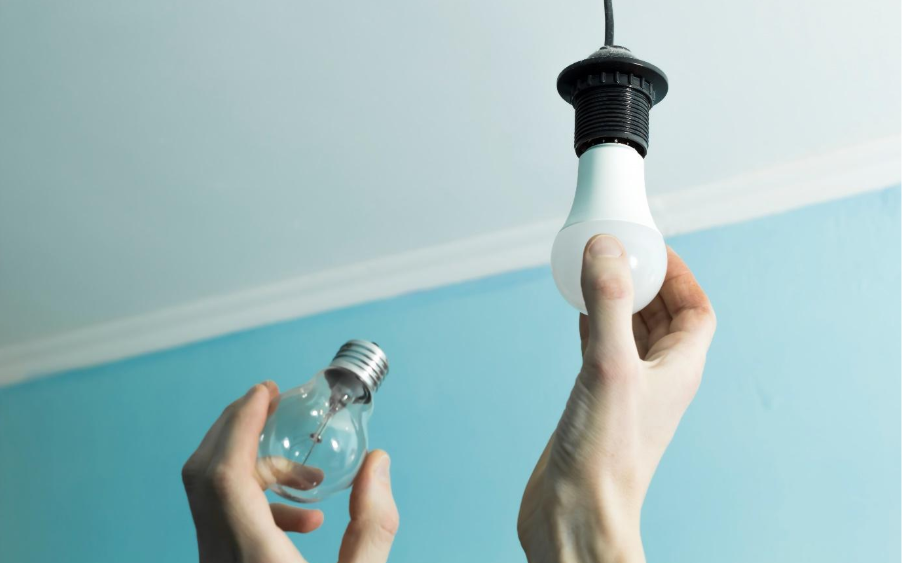
The world is becoming more conscious about the environment and our everyday habits have a bigger impact than we realise. One of the easiest changes you can make at home is switching to eco-friendly light bulbs. Not only will this save energy and reduce your bills, but it also helps protect the planet. A recent report from the United Nations Office at Geneva warns that one million species are at risk of extinction and 75% of land ecosystems and two-thirds of marine environments have been significantly altered by human activity.
Why Switch to Eco-Friendly Light Bulbs?
Traditional incandescent bulbs are:
- Short-lived: They break easily and need frequent replacement.
- Energy-intensive: They consume far more electricity than LED or CFL bulbs.
- Expensive in the long run: Higher energy use means higher bills.
Eco-friendly alternatives, like LEDs and CFLs, use 25–80% less energy. For example, replacing all the bulbs in a standard home could save you up to £70 per year on electricity. Multiply that across households and the environmental impact is huge!
Types of Eco-Friendly Light Bulbs
Here’s a quick comparison of the three main types:
Bulb Type |
Energy Use |
Lifespan |
Brightness |
Notes |
Halogen Incandescent |
42W (vs 60W incandescent) |
~2,000 hrs |
Instant full brightness |
Slightly more efficient than traditional bulbs |
CFL (Compact Fluorescent Lamp) |
15W |
~10 years |
Takes 1–2 mins to reach full brightness |
Affordable, but contains small amount of mercury |
LED (Light Emitting Diode) |
12W |
~25 years |
Instant full brightness |
Most energy-efficient, wide range of colours and smart options |
Choosing the Right Bulb for Your Home
When choosing a bulb, consider:
- Brightness (Lumens, not Watts):
-
- Home/desk: ~500 lumens
-
- Large/dark rooms: ~1,000 lumens
- Colour temperature:
-
- Warm white (2700–3000K) → cosy, relaxing
-
- Cool white (4000–5000K) → kitchens, offices
-
- Smart RGB LEDs → customisable mood lighting
- Price vs Lifespan:
-
- LED bulbs cost more upfront but pay for themselves in 1–2 years thanks to energy savings.
Pro Tip: Gradually replace old bulbs as they burn out to spread costs over time.
Cost & Energy Savings Comparison
Bulb Type |
Energy per Year |
Avg Lifespan |
Approx. Cost |
Total Savings |
Incandescent |
60W |
1–2 yrs |
£1–2 per bulb |
Baseline |
Halogen |
42W |
2 yrs |
£2–3 |
~£10/year savings |
CFL |
15W |
10 yrs |
£4–5 |
~£35/year savings |
LED |
12W |
25 yrs |
£5–8 |
~£70/year savings |
Tip: The numbers vary depending on usage, but LEDs consistently offer the best combination of energy savings and longevity.
Smart & Stylish Options
Modern LEDs aren’t just efficient, they’re fun:
- Smart bulbs: Control colour, brightness and schedules via your phone.
- Designer bulbs: Available in shapes and hues for stylish interiors.
- Dimmable bulbs: Save energy and create mood lighting.
With these options, eco-friendly lighting can enhance your home décor while cutting costs and energy use.
Where to Buy & Discount Tips
Look for ENERGY STAR® or EU energy label for verified efficiency.
Check reputable retailers for certified energy-efficient bulbs.
Use promo codes and seasonal discounts to save.
Key Takeaways
- Switching to LED or CFL bulbs saves energy, money and reduces environmental impact.
- Brightness is now measured in lumens, not watts.
- Gradual replacement is an easy way to upgrade your lighting without a big upfront cost.
- Smart and designer LEDs add style and control to your home.
Ready to make the switch? Start by replacing the bulbs you use the most and enjoy lower energy bills immediately.
Frequently Asked Questions
Q: Are LED bulbs really better than CFLs?
A: Yes, LEDs use less energy, last longer and don’t contain mercury.
Q: How much can I save by switching to LED bulbs?
A: On average, a household can save up to £70/year, depending on usage.
Q: Can I dim LED or CFL bulbs?
A: Only dimmable versions will work with a dimmer switch. Check packaging before buying.
Think we missed something? Do you have a different opinion?
Comment below to get your voice heard…




[…] […]
[…] will require about 20 lumens of light per square foot. Other suggestions include to use roughly 1,000 lumens for large, dark spaces and just 500 lumens for most rooms in the […]
What is the best environmentally safe color ppfor outdoor lamp posts
[…] a significantly lower carbon footprint. LEDs use a lot less energy to run (they can be up to 80% more efficient than incandescent bulbs) and, as a result, can save you up to $100 a year in electricity […]
[…] emit no heat, and give very bright light.One of the benefits of LED light bulbs is that they are environmentally-friendly. According to a recent study, LEDs can save $7,500 in a five-year period. This means that you’ll […]
[…] all bulbs to environmentally friendly […]
[…] and a longer lifespan, eco-friendly light bulbs are the way forward, and they’re estimated to save you money in the long […]
[…] Though the sage house isn’t big, it’s neither small. Two large glass doors open the whole house up and make the house bright during the daytime so that you don’t need to use light bulbs. […]
[…] and a longer lifespan, eco-friendly light bulbs are the way forward, and they’re estimated to save you money in the long […]
[…] Check which light bulbs you are using and next time you need to buy some more, choose the eco-friendlier options. LED light bulbs are more energy-efficient compared to their traditional counterparts. Although they are more expensive initially, their lower energy use and lifespan (around 25 years) mean they could soon save you up to £70 per year6. […]
[…] Eco-friendly lighting is good for the environment because it uses much less energy to run compared to your typical incandescent and fluorescent bulbs. So not only does this help lower utility costs, but you will also be helping to lower energy use. There are three main types of eco-friendly light bulbs available that you can choose from including halogen incandescent, LED, and CFL. […]
[…] “Eco-friendly LED light bulbs are good for the environment simply because they use much less energy to run. The increased efficiency ranges between 25% and 80% in comparison to incandescent lights. On average, it is estimated that switching to eco-friendly light bulbs can save you up to £70 a year.” – How To Choose The Best Eco-Friendly Lightbulb. […]
Cool blue o bright light to read by is extremely important for me.
Where can I order from.
All shops I go to have ‘sold out’no idea when re stocking.
Reading this, one might easily assume that it’s simply a matter of selecting the most efficient eco-friendly bulb. (Buzzzz! No.) Compact fluorescents generally have unpleasant output spectra. LED bulbs have complex interactions with dimmers, if your home is fitted with dimmers, even if the bulbs say that they work with dimmer. I think a more realistic presentation would be a good plan.
[…] At the end of the day, lights are designed to serve the purpose of lighting up your home. An effective light will do its job in an environmentally conscious way (just make sure that you choose the correct eco-friendly bulb). […]
[…] are still working just fine. Instead, the next time one of your bulbs burns out replace it with a more eco-friendly version. The best option to go for is a compact fluorescent light. They can last you a really long time and […]
As a person who suffers from SAD and CFS it would be really helpful to have some guidance towards health friendly / natural light qualities and not just energy consumption and cost. If we make ourselves ill by spending too many hours in blue light then our long term energy consumption (ie in and out of hospitals like myself) will increase hugely.